Bass Drum Redwork: A Designer's Review
As an embroidery designer who has reviewed hundreds of machine embroidery designs for small business merchandise, I approached Bass Drum Redwork with a specific lens: does this embroidery file deliver professional value for branded patches, custom apparel, and commercial projects? After examining its structure, stitch options, and potential applications, I can share a detailed assessment from a business-first perspective. This review is written for embroidery shops, apparel decorators, Etsy sellers, and handmade brands looking to invest in design assets that build brand identity and customer trust.
First Impressions and Visual Personality
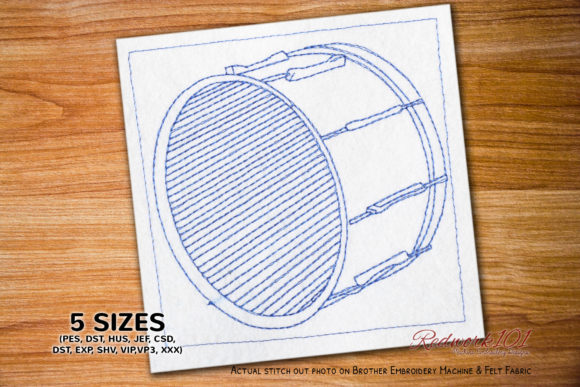
Bass Drum Redwork immediately communicates a bold, classic, and sporty aesthetic. The term "redwork" traditionally refers to a single-color stitched design, often in red thread, but here the design transcends that limitation by offering an optional Box Stitch with a distinct outer color. This flexibility gives the design a layered, professional finish that works well for both subtle accents and statement pieces. The visual personality leans toward structured, rhythmic, and energetic—perfect for businesses that want to convey reliability and a touch of artistic flair. It feels modern yet timeless, with a handmade quality that suits boutique merchandise and craft business assets alike.
For a small café, bakery, or creative studio, Bass Drum Redwork can serve as a chest logo accent or a sleeve detail that adds a polished, premium touch. Its bold lines suggest a strong brand identity, while the optional Box Stitch allows for customization to match thread colors with existing branding. This design does not feel overly decorative; it is purposeful and functional, aligning with the needs of small business owners who require versatile embroidery files for multiple product types.
Real-World Business Applications
In my experience, the best embroidery designs for small business merch are those that adapt to various surfaces without losing integrity. Bass Drum Redwork excels in several key applications:
- Embroidered patches: The design's clear outlines and moderate stitch density make it ideal for patches. You can stitch it on twill or felt, cut it out, and apply it to uniforms, bags, or hats. The optional Box Stitch provides a clean border, eliminating the need for additional merrowing.
- Staff uniforms and aprons: For a bakery or florist, this design on an apron pocket or chest area creates a unified, professional look. Its bold nature ensures visibility even from a distance, which is crucial for brand recognition.
- Cap embroidery: The design's compact structure works well on cap fronts, but I recommend testing it at a reduced size (e.g., 2 to 3 inches wide) to ensure it conforms to the curve without distortion. The Box Stitch can be omitted for a simpler look on small caps.
- Tote bags and product packaging: As a tote bag design, Bass Drum Redwork adds a premium, handmade feel. It also works as a branded accent on pouches, drawstring bags, or even as a label on handmade products like soap or candles.
- Event merch and customer gifts: Whether for a local music venue or a community market, this design on shirts or hats creates memorable merchandise that reinforces brand identity. The rhythm of the bass drum imagery resonates with customers who appreciate artistry.
For businesses like pet brands or craft studios, the design's bold lines ensure it remains legible when embroidered on textured fabrics like canvas or denim. It also pairs well with other design assets, such as text or logos, making it a versatile addition to your digital embroidery library.
Where to Exercise Caution
While Bass Drum Redwork is robust, there are specific scenarios where careful planning is required:
- Small patch sizes: If you plan to use this design as a small patch (under 2 inches), the details may become crowded. Test the embroidery file at your target size before finalizing. The optional Box Stitch can add visual weight, so consider skipping it for very small applications.
- Cap fronts and curved surfaces: The design's density may cause puckering on curved surfaces like cap fronts or sleeve cuffs. Use a medium-weight stabilizer and reduce the stitch count if your machine allows. Always hoop the fabric with the curve in mind.
- High stitch density areas: The design's outlines and Box Stitch may create dense zones. On lightweight fabrics like t-shirts, this can lead to puckering or distortion. Test on a sample garment first, and consider using a cutaway stabilizer for stability.
- Dark uniforms: If the outer Box Stitch is a different color, ensure it contrasts well with dark fabrics. For example, a white or light blue box on a black shirt works, but a dark red box on a navy shirt may disappear. Always review thread colors in your digitizing software.
- Items requiring frequent washing: For aprons or work shirts that are washed often, the design's stitch density should be moderate. The optional Box Stitch may add extra threads that could pull if not properly stabilized. Use a quality stabilizer and reinforce the back with a tear-away or cutaway layer.
These cautions are not deal-breakers; they are standard considerations for any commercial embroidery project. By planning ahead, you can ensure that the finished product meets your quality standards.
Brand Identity and Customer Trust
In the world of small business merch, every design element contributes to brand identity. Bass Drum Redwork, with its bold and rhythmic visual, signals reliability, creativity, and professionalism. For a local music shop or event producer, this design directly ties to the brand's core—percussion and energy. For a café or bakery, it adds a touch of artistic character that differentiates the brand from competitors.
Customer trust is built on visual consistency. When you use this design across multiple products—caps, tote bags, aprons—you create a cohesive look that customers recognize. The optional Box Stitch allows for color customization, which means you can align the design with your brand's palette. This attention to detail enhances the perceived value of your merchandise, making it feel like a premium, handmade product rather than a generic item.
From a buyer engagement perspective, a well-executed embroidery design like Bass Drum Redwork encourages customers to become brand ambassadors. They wear your logo or patch with pride, and the quality of the stitching reflects your commitment to excellence. For handmade brands and Etsy sellers, this design can be a key asset in your product lineup, especially when paired with printable mockups for listings.
Practical Embroidery Designer Notes
Before you commit Bass Drum Redwork to production, here are actionable steps based on my experience:
- Test it in black and white first: Stitch out the design with a single color (e.g., black thread on white fabric) to evaluate the line clarity and density. This baseline test reveals any issues with geometry or spacing.
- Check if it works at small patch size: Reduce the design to 2 inches in your embroidery software and check for detail loss. The Box Stitch may become too thick, so consider omitting it for small applications.
- Review thread color contrast: The description notes that the outer Box color can be different. In your software, simulate the design with your chosen thread colors. Ensure the contrast is visible on your target fabric, especially for dark or textured materials.
- Inspect spacing and overlap: Look for any areas where stitches might overlap or leave gaps. The design's rhythm should be balanced, with no dense clusters that could cause puckering.
- Confirm hoop size and stabilizer: The design likely fits a standard hoop (e.g., 4x4 or 5x7), but verify in your digitizing program. Use a medium-weight cutaway stabilizer for most fabrics, and a heavier stabilizer for stretchy or textured materials.
- Test on real fabric: Stitch out the design on the exact fabric you plan to use for your products. This step is non-negotiable for commercial embroidery. Check for tension issues, thread breaks, and fabric distortion.
- Create a mockup for client approval: If you are producing this for a client, use a printable mockup to show how Bass Drum Redwork will look on a cap, apron, or tote bag. This builds trust and reduces revisions.
- Compare it beside other design assets: If you have other embroidery files or logos, test Bass Drum Redwork alongside them to ensure visual consistency. The design should complement your existing brand identity, not clash with it.
- Confirm commercial licensing: Before using this design for business merch, check the license terms. The description does not specify usage rights, so contact the seller or review the file's license to ensure it covers commercial embroidery, patches, and resale of finished products.
These notes are designed to help you avoid common pitfalls and achieve a professional finish. For small business owners, investing time in testing ensures that the final product enhances your brand rather than detracting from it.
Final Thoughts on Bass Drum Redwork
Bass Drum Redwork is a solid choice for small business merchandise and branded patches. Its bold, athletic aesthetic suits a range of industries, from sports to creative studios, and its optional Box Stitch provides flexibility for customization. When used correctly—with proper sizing, stabilizer, and thread choices—it delivers a premium look that builds customer trust and reinforces brand identity.
As you incorporate this embroidery file into your product line, remember that the design's success depends on meticulous execution. Follow the practical notes I've outlined, and you'll produce finished products that stand out in the marketplace. Whether you are an embroidery shop fulfilling a bulk order or an Etsy seller creating handmade gifts, Bass Drum Redwork can be a valuable addition to your design assets.