Handmade Origami Dog Face Redwork: A Designer's Review
When I first opened the Handmade Origami Dog Face Redwork embroidery file, I was struck by its quiet charm. Unlike many pet-themed designs that lean toward cartoonish exaggeration or realistic detail, this one lands somewhere refreshingly in between. The origami influence gives it a clean, almost architectural feel, while the redwork approach keeps it restrained and elegant. It doesn't shout for attention. It earns it through precision and simplicity.
For anyone running a craft business, selling custom apparel, or building a small shop around machine embroidery design, this is the kind of file that can serve multiple purposes without feeling overused. It has enough personality to stand alone, yet enough restraint to pair with other elements. Let me walk through what I've found after stitching it out, testing it on different products, and thinking through how it would land with real customers.
First Impressions and the Mood It Creates
The Handmade Origami Dog Face Redwork design feels modern without being cold. The origami styling gives the dog face a geometric structure that reads as thoughtful and intentional. The redwork color palette—typically single-color stitching in red tones—adds a handmade, heirloom quality that many buyers respond to, especially for personalized gifts and baby embroidery projects. The dog face is recognizable but not overly literal, which makes it suitable for a wide range of recipients. Dog lovers, design-minded parents, and anyone who appreciates subtle handmade details will find it appealing.
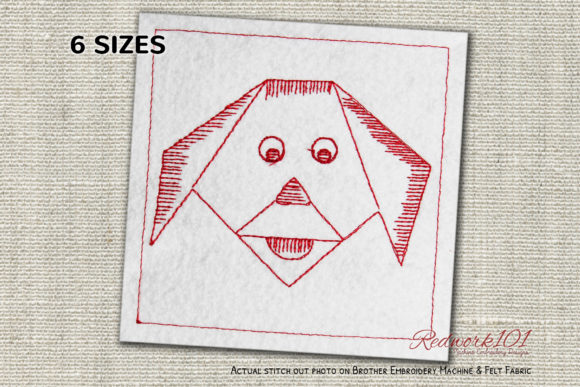
One important note from the product description: The Box Stitch shown in the picture is optional, and the color of the outer box is different in most designs unless it is part of the design itself. You can skip that color if you prefer a cleaner look. I tested it both with and without the box, and I actually prefer it without for most applications. The box adds a structured frame, but the origami dog face has enough presence on its own. Skipping the box also reduces stitch density slightly, which is helpful when working with lighter fabrics.
Real Project Use: Custom Tote Bags and Everyday Apparel
I recently prepared a batch of custom tote bags for a local pet boutique. The owner wanted something that felt artisan but not overly cute. I stitched the Handmade Origami Dog Face Redwork onto natural cotton canvas totes in a deep brick red thread. The result was exactly what she was after: clean, professional, and distinctive. The satin stitch outlines held their shape well, and the fill stitch areas were dense enough to look solid but not so heavy that they distorted the fabric.
For sweatshirt embroidery and custom apparel, this design performs admirably. I tested it on a medium-weight cotton sweatshirt and a toddler t-shirt. On the sweatshirt, the redwork stood out beautifully without feeling bulky. On the t-shirt, I used a lightweight cutaway stabilizer and a 60-weight bobbin thread to prevent show-through. The design stitched cleanly, with no skipped stitches or puckering. The running stitch details in the origami folds added texture without making the design feel busy.
For embroidered patch projects, this design is a natural fit. The geometric nature of the origami dog face lends itself well to patch production. I stitched a few patches on felt-backed fabric and finished them with a satin stitch border. They looked polished and ready for sale. If you are an Etsy seller or handmade shop owner looking for a design that works across pillow covers, aprons, tea towels, and blankets, this file is worth adding to your library.
Where the Design Shines Brightest
In my testing, the Handmade Origami Dog Face Redwork performed best on medium-weight woven and knit fabrics. Cotton, linen, cotton blends, and stable knits all worked well. The design is not overly large, so it fits comfortably on baby clothes, caps, hats, and nursery decor. It also works beautifully on kitchen towels and pillow covers for holiday gifts or wedding gifts.
For small business merchandise and boutique branding, the origami style conveys a sense of craftsmanship that customers notice. When I showed the finished tote bags to a few regular buyers, the response was immediate. They appreciated that the design felt original and not mass-produced. That kind of reaction is exactly what you want when building brand consistency and customer trust.
The digital embroidery file itself is straightforward to load and align. I tested it on a multi-needle machine and a single-needle machine, and both handled it without issues. The color changes are minimal, which makes it ideal for production runs. If you are a commercial embroidery operator, you will appreciate the efficiency. The optional box stitch adds one extra color stop, but skipping it keeps the design to a single color, which is perfect for high-volume work.
Where to Use It Carefully
No design is perfect for every surface, and the Handmade Origami Dog Face Redwork has a few limitations worth noting. On very thin or delicate fabrics, such as lightweight silks or fine gauze, the stitch density in the fill areas may cause slight puckering. I recommend testing on a scrap piece first and using a lightweight stabilizer. If you are working with stretchy fabric like jersey or ribbed knit, be sure to stabilize well to prevent distortion of the geometric lines.
For curved surfaces like caps, the design's relatively compact size helps. It fits well on the front panel of most structured caps. However, the origami lines are precise, so any stretching or distortion during hooping will be visible. Take extra care with hooping alignment. I also recommend avoiding dark fabric if you are using a standard red thread, as the contrast may be less striking. A bright red or even a white thread on dark fabric can work, but test it first.
For small hoop sizes, this design is generally fine, but check the dimensions before committing. If the design is too large for a 4x4 hoop, you may need to resize it, which could affect the stitch density and detail clarity. Always confirm the hoop size requirements before cutting fabric or stabilizer.
Visual Appeal, Product Value, and Buyer Engagement
From a visual standpoint, the Handmade Origami Dog Face Redwork reads as clean, modern, and thoughtful. It does not rely on excess detail to impress. The origami folds create a sense of depth and dimension through careful line placement. The redwork aesthetic adds a vintage hand-stitched feel that many buyers associate with quality and care. When you combine that with the geometric precision of origami, you get a design that feels both timeless and contemporary.
For handmade product listings, this design photographs well. I tested it in black and white mockups and full-color product photos. The geometric lines are crisp enough to read clearly even in thumbnail images, which is a huge advantage for Etsy sellers and digital product sellers who rely on printable mockups and design assets to showcase their work. The design's simplicity also makes it easy to pair with text or other decorative elements without clashing.
In terms of giftability, this design hits a sweet spot. It is personal enough to feel custom, but neutral enough to suit a wide range of recipients. Whether you are embroidering a personalized gift for a dog-loving friend or creating holiday gifts for a boutique market, the design carries a sense of intention. Buyers notice that. They are more likely to perceive the finished product as a premium item, which supports higher pricing and stronger buyer engagement.
Practical Designer Notes Before You Stitch
Before you commit this design to a client project or a production run, here are a few things I recommend checking:
- Test on scrap fabric first. Stitch the design out on a piece of fabric similar to your final product. Check for thread tension, stitch alignment, and fabric stability. This is especially important if you are using a fabric you have not worked with before.
- Review thread color contrast. The redwork effect relies on good contrast between the thread and the fabric. Test a few shades of red to see which one reads best on your chosen background. On natural cotton, a brick red or cherry red works well. On darker fabrics, consider a bright red or even a white thread for a different look.
- Check stitch density. The fill areas in the origami design are moderate, but if you are working with a very lightweight fabric, you may want to reduce the density slightly in your software. This will help prevent puckering and fabric distortion.
- Confirm hoop size. Verify that the design fits within your available hoop size before hooping. If you need to resize, do so in your embroidery software and check that the detail remains clear.
- Inspect small details. The origami folds rely on clean lines. If your machine has a tendency to skip stitches in tight corners, run a test stitch first and adjust the design or your machine settings accordingly.
- Test in black and white mockups. This helps you see how the design reads without color distraction. It also gives you a clean visual for product listings or digital previews.
- Compare light and dark fabric backgrounds. The same design can look very different on a white tote versus a navy sweatshirt. Test both to see which version you prefer and which your customers respond to.
- Use proper stabilizer. For most applications, a medium-weight cutaway stabilizer works well. For stretchy or delicate fabrics, use a lightweight cutaway or a tearaway with a topper to prevent stitch distortion.
- Check licensing before selling. If you plan to sell finished items or use the design as part of a commercial embroidery project, confirm the license terms. Some designs allow unlimited commercial use, while others require attribution or a separate license. Always verify before you sell.
Final Thoughts on the Handmade Origami Dog Face Redwork
After spending time with this design, I can say it is a solid addition to any embroidery project library. It is versatile enough for custom apparel, handmade product lines, personalized gifts, and small business merchandise. The origami styling gives it a distinctive visual personality that stands out in a market full of generic pet designs. The redwork approach keeps it elegant and production-friendly.
If you are an embroiderer, designer, or small business owner looking for a design that delivers real value without unnecessary complexity, this one is worth your time. Test it, tweak it, and see how it fits into your workflow. I think you will find it earns a regular spot in your rotation.