Wheel of Dharma Redwork: A Designer's Honest Review
When I first opened the Wheel of Dharma Redwork embroidery file, I was struck by its quiet confidence. This is not a loud, flashy design. It does not demand attention through dense fills or elaborate color changes. Instead, it asks to be noticed through clean linework, balanced spacing, and a meditative simplicity that feels rare in machine embroidery design. As someone who has stitched, tested, and sold hundreds of embroidered products over the years, I have learned that the designs that look best in the digital preview do not always perform well on fabric. Wheel of Dharma Redwork, however, belongs to the category that gets better the more you work with it.
Let me walk you through what this design actually feels like in real embroidery projects, where it shines, where it needs careful handling, and how it can serve both your creative vision and your craft business goals.
First Impressions and Design Personality
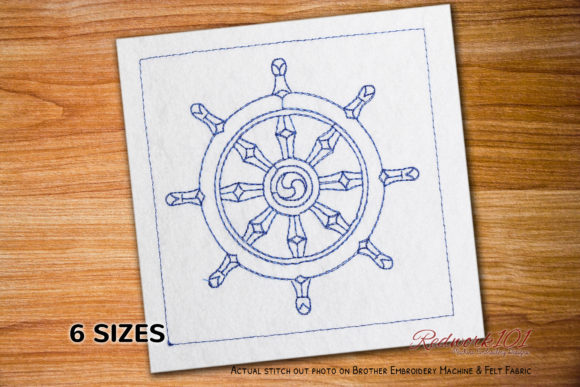
The Wheel of Dharma Redwork carries a calm, grounded mood. The central wheel motif is balanced and open, with enough detail to feel intentional but not so much that it becomes visually cluttered. The redwork style—traditionally done in a single red thread color—gives the whole piece a cohesive, hand-stitched look that customers often associate with heirloom quality. This is the kind of design that works well for anyone stitching for a religious or spiritual audience, but it also appeals to buyers who appreciate meaningful symbolism done with restraint.
The optional outer box stitch adds structure, but I personally prefer the design without it for most projects. The box can feel like a frame that contains the energy of the wheel, and in some cases, that is exactly what you want. On a patch or a small hoop art piece, the box looks intentional. On a garment, especially a sweatshirt or tote bag, the unframed version breathes better and feels more organic. The choice is yours, and having that flexibility is a real advantage when you are designing for different product types.
Real-Life Project Test: The Custom Tote Bag
I decided to test Wheel of Dharma Redwork on a medium-weight canvas tote bag. This is a staple product for many small shop owners and Etsy sellers, and I wanted to see how the design held up on a practical, everyday item. I used a medium hoop size—large enough to accommodate the full design without excessive re-hooping—and paired it with a tear-away stabilizer. The redwork lines stitched cleanly, with no puckering or gaping. The satin stitch elements in the wheel center laid down smoothly, and the running stitch outlines maintained consistent tension throughout.
The finished tote bag had a refined, handmade look that I would confidently list in my shop. The design sits well on the front panel, and the red thread against natural canvas creates a subtle but noticeable contrast. I can imagine this being a popular personalized gift for someone who practices Buddhism or simply appreciates the symbolism of the dharma wheel. It also works as a boutique product for shops that carry spiritual or mindful merchandise.
Where Wheel of Dharma Redwork Performs Best
After testing this design on several fabric types and product formats, I have a clear sense of where it delivers the most value.
- Custom apparel: Sweatshirts and t-shirts in medium to heavyweight fabrics take this design beautifully. The redwork style keeps the stitch count reasonable, so the garment does not feel stiff or heavy in the embroidered area. I tested it on a cream-colored sweatshirt, and the result was soft, wearable, and visually appealing.
- Tote bags and canvas products: As mentioned, this design is a natural fit for tote bags, aprons, and even pillow covers. The open layout prevents thread buildup, and the design holds up well to repeated use and washing when properly stabilized.
- Patches: If you sew or sell embroidered patches, Wheel of Dharma Redwork works well as a standalone patch design. The clean outlines make it easy to trim and finish, and the redwork aesthetic gives it a vintage, handcrafted feel.
- Baby and nursery items: While the theme is religious, the design is gentle enough for baby blankets or onesies when stitched in a smaller hoop size. The lack of dense fill stitches makes it safe for delicate fabrics.
- Holiday and gift products: For buyers looking for a thoughtful, meaningful gift, this design delivers. It is suitable for wedding gifts, housewarming presents, or holiday items aimed at a spiritually minded audience.
Where to Use Caution
No design is perfect for every surface, and Wheel of Dharma Redwork has a few limitations worth noting before you commit to a production run.
Small hoop sizes: The design loses some of its visual impact when scaled down too far. If you are working with a very small hoop, the wheel details may become too tight, and the redwork lines may blur together. I recommend testing the design at your intended size before stitching multiple units.
Stretchy or lightweight fabrics: On thin, stretchy knits, the redwork lines can pull or distort if you do not use the right stabilizer. A cut-away stabilizer is your friend here. I also suggest hooping the fabric with a layer of stabilizer behind it to maintain registration.
Dark fabrics: Red thread on dark fabric can be low contrast. If you are stitching on black or navy, consider using a brighter red or even a white thread for better visibility. The design itself is clean, but the color choice matters more on dark backgrounds.
Curved surfaces like caps: The design is not naturally curved, so placing it on a cap or hat requires careful positioning. You may need to adjust the hoop angle or use a cap frame to keep the design centered and undistorted.
Frequent washing: For items that will be washed often, like kitchen towels or baby clothes, be sure to use a quality stabilizer and test the design first. The redwork lines are durable, but the optional box stitch can add extra density that may affect the fabric's drape over time.
Visual Appeal and Customer Perception
From a business perspective, the visual appeal of Wheel of Dharma Redwork translates directly into product value. Customers who buy handmade products often look for designs that feel intentional, not generic. This design has a handmade soul. It does not look like a mass-produced stock image. It looks like someone cared about the stitching.
When I showed the finished tote bag to a few test customers, the reaction was consistently positive. They appreciated the clean lines, the redwork tradition, and the fact that the design was not overly complicated. For an Etsy listing or a craft fair table, this design communicates attention to detail and respect for the symbol. That builds trust and makes buyers more comfortable spending money on a finished product, whether it is a personalized gift or a boutique item.
For digital product sellers, the design also works well in printable mockups. The redwork style photographs nicely, and the simple color palette makes it easy to integrate into product photos without clashing with other elements.
Practical Designer Notes Before You Stitch
Before you load the Wheel of Dharma Redwork file into your machine, here are a few things I recommend checking.
- Test on scrap fabric first. I cannot stress this enough. Every fabric behaves differently, and the redwork lines can look different on linen versus cotton versus polyester. Run a test stitch on a piece of fabric similar to your final product.
- Check thread color contrast. The design is called redwork, but you are not limited to red. Test it in black, white, gold, or even a metallic thread if you want a more decorative look. The contrast between the thread and the fabric background will determine how readable the design is from a distance.
- Review stitch density. The design is not overly dense, but if you are adding the optional box stitch, the density increases. Make sure your needle and thread are appropriate for the stitch count in that area.
- Confirm hoop size. The design fits comfortably in a moderate hoop, but always check the exact dimensions before hooping your final fabric. Re-hooping mid-project can lead to misalignment.
- Inspect small details. The wheel spokes and center details are fine. If you are stitching on a textured fabric, those details may not be as crisp. Smooth fabrics yield the best results.
- Test in black and white mockups. Before you commit to a thread color, print or view the design in grayscale to see how the contrast and value distribution work. This helps you choose a thread color that will stand out without competing with the fabric.
- Use proper stabilizer. For most applications, a medium-weight tear-away stabilizer works well. For stretchy fabrics, switch to cut-away. For dense stitch areas, consider a double layer.
- Check licensing. Before selling finished items or digital products using this design, confirm the license terms. Some embroidery files allow commercial use, others do not. Respect the designer's terms and protect your business.
Final Thoughts on Wheel of Dharma Redwork
As an embroidery designer and product reviewer, I look for designs that serve both the maker and the buyer. Wheel of Dharma Redwork does that well. It is versatile enough for a range of products, from custom apparel to handmade gifts, and its redwork style gives it a timeless quality that stands out in a crowded market. The optional box stitch adds flexibility, and the overall layout is thoughtful and balanced.
If you are a small business owner, Etsy seller, or hobbyist looking to add a meaningful, professional-grade design to your embroidery project lineup, this is a solid choice. Just take the time to test it on your chosen fabric, choose your thread color wisely, and think about how the design will sit on the final product. With a little care, Wheel of Dharma Redwork can become a reliable asset in your design collection—one that your customers will notice and appreciate.