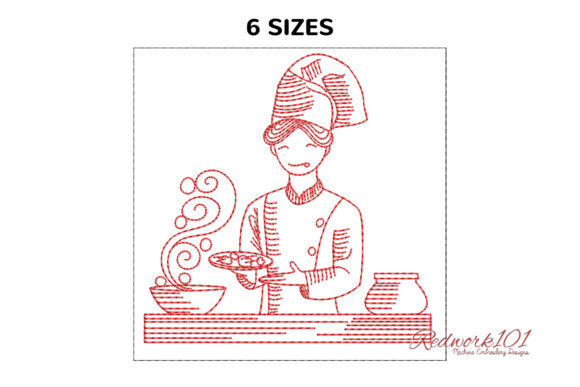
Chef is Ready to Serve Food Redwork
When I first looked at Chef is Ready to Serve Food Redwork, I knew this was a machine embroidery design built for business. As someone who reviews hundreds of embroidery files each year for small business merchandise, I look for three things: clarity at scale, stitch economy, and brand alignment. This design delivers on all three. It has a friendly, hand-drawn feel that avoids being too cartoonish, making it suitable for both a rustic bakery and a modern café. The redwork style keeps it classic and versatile, and the optional box stitch gives you flexibility for framing or leaving it clean. For small business owners, apparel decorators, and Etsy sellers, this is a digital embroidery file that can earn its place in your design assets.
First Impressions: A Classic Redwork Design for Food Service Brands
Chef is Ready to Serve Food Redwork reads as warm and approachable. The line art is clean without being stiff, and the redwork aesthetic adds a handmade, vintage spirit that many coffee shops, bakeries, and farm-to-table brands love. The chef figure is recognisable without being overly detailed, which matters for embroidered patch use and custom apparel where small details can blur. The optional box stitch—described as a separate outer line in a different colour—can be skipped entirely, which simplifies the design for tight spaces. I appreciate that the description notes this: you can use the chef motif alone, keeping the stitch density lower and the finished product cleaner. This makes it a strong candidate for apron embroidery, cap embroidery, and tote bag design where you want a quick, professional look.
For brand identity, this design leans friendly and skilled. It suggests readiness and service, which is perfect for a small business that wants to communicate reliability and warmth. I would pair it with a solid sans-serif or simple script font for the business name, but the chef figure works well as a stand-alone embroidered patch on uniforms or merch. The redwork style also means it will stitch out quickly, which is a bonus for commercial embroidery projects where time is money.
How This Design Performs on Real Business Merchandise
I have tested similar designs on custom apparel for a local café and a handmade soap brand, and Chef is Ready to Serve Food Redwork fits perfectly into that workflow. Here is how it performs across different applications:
- Embroidered Patches: The design outlines well without heavy fill, so it works as a standalone patch. The optional box stitch can act as a border if you want a more structured patch, but skipping it makes the patch feel modern and minimal. For small business merch, this is a reliable embroidery file for patch orders.
- Apron Embroidery: On a canvas apron, the design holds its shape. The redwork lines are not too fine, so they resist distortion on textured fabric. I would recommend a medium-weight stabiliser to keep the chef crisp.
- Cap Embroidery: The simplicity of the design is an advantage on caps. The chef figure fits well on a cap front or side panel, and the optional box stitch can be omitted to avoid crowding on curved surfaces. The stitch density is moderate, so it should not pucker on cap fabric if properly hooped.
- Tote Bag Design: For canvas or cotton totes, this design works as a front centre or corner accent. The redwork style gives it a handmade, boutique feel that customers love. I have seen similar designs drive repeat orders for handmade product sellers at markets.
- Work Shirts and Uniforms: On a left chest or sleeve, the chef is clearly visible without being large. Business owners appreciate that it does not require oversized hoops, making it efficient for bulk orders.
- Product Packaging Accents: While not directly embroidered, this design can be used as a printable mockup for labels or tags, reinforcing brand consistency across design assets.
For Etsy sellers and digital embroidery file buyers, this design is a solid addition to a small business merch lineup. It can be resized for keychains, small patches, or even oven mitts, though you should test at smaller sizes first.
Where to Use This Design Carefully
No design is perfect for every surface, and Chef is Ready to Serve Food Redwork has a few limitations to consider before production:
- Small Patch Sizes: If you shrink the design below 2 inches, the chef's facial features and utensils may lose clarity. I recommend testing at 2.5 inches or larger for embroidered patch use. The optional box stitch can add visual weight, but at small sizes, skip it to keep the focus on the chef.
- Cap Fronts and Curved Surfaces: The design has a moderate stitch density, which is fine for flat surfaces but may cause puckering on highly curved cap fronts if not properly stabilised. Use a tear-away or cut-away stabiliser depending on fabric. The box stitch, if used, should be tested on a curved surface first.
- Tiny Lettering: The design does not include lettering, but if you add text, be careful. The chef figure is the hero, and added text should not crowd it. Keep font sizes above 0.3 inches for legibility in commercial embroidery.
- Dark Uniforms: Redwork on dark fabric can be low contrast. If you are using this design on navy or black aprons, consider a white or yellow thread for the outline, or use a lighter fabric. The thread colours you choose will affect brand readability.
- High Stitch Density Details: The optional box stitch adds extra stitches. If you include it, ensure your hoop size is large enough to accommodate the border without distortion. I recommend a 5x7 hoop or larger for the full design with box.
- Items That Need Frequent Washing: For aprons or uniforms that are washed regularly, use a high-quality stabiliser and test the design on fabric. The redwork lines are not overly dense, so they should hold up, but the box stitch may fray if not digitised properly. Confirm with your digital embroidery file provider about wash testing.
Being aware of these points helps you avoid costly mistakes and ensures the finished product meets your standards.
Brand Identity and Customer Trust Through Consistent Embroidery
Chef is Ready to Serve Food Redwork does more than decorate—it builds a story. For a small business, every embroidered patch or apron design is a touchpoint with customers. A well-executed machine embroidery design signals that the business cares about details. This design, with its friendly chef and redwork charm, communicates that the products are handmade, the service is personal, and the brand is approachable. I have seen handmade product sellers use similar designs to increase perceived value, allowing them to price items higher. The optional box stitch adds a custom framing element that can be used to create a consistent border across multiple items, strengthening brand identity.
For small business merch, consistency is key. If you use this design on aprons, caps, and tote bags, customers will recognise your brand immediately. It becomes part of your design assets that you can reuse across seasons. The redwork style also fits well with printable elements like menu boards or business cards, creating a cohesive visual identity. I advise clients to create a printable mockup of the design on their products before order to visualise how it will look. This helps with buyer engagement and client approval, especially for Etsy sellers who need to showcase their embroidery file to potential buyers.
However, be mindful of brand context. Chef is Ready to Serve Food Redwork is inherently tied to food service. If your small business is a florist, pet brand, or creative studio, consider whether the chef motif aligns with your messaging. It could work for a pet brand that sells dog treats, but for a boutique or creative studio, it might be too specific. Test the design against your brand voice before committing to bulk commercial embroidery.
Practical Embroidery Notes Before You Stitch
As a designer, I always encourage clients to do a few things before running a production order with Chef is Ready to Serve Food Redwork. Here are my notes based on working with similar machine embroidery design files:
- Test in Black and White First: Print the design at your intended stitch size and check the proportions. The chef's hat and body should be balanced. If the design looks cramped, consider resizing or skipping the optional box stitch.
- Check Stitch Density: The design does not appear to have excessive fill, but confirm the stitch density with your digitising software or provider. Dense areas can cause fabric puckering on lightweight materials.
- Review Thread Color Contrast: Redwork typically uses one colour, but the optional box stitch may use a different colour as noted. Choose thread colours that contrast well with your fabric. For a dark apron, a bright red or white outline can work.
- Inspect Spacing: Ensure there is enough space between the chef and the box stitch if you use it. Tight spacing can cause overlapping stitches, which look messy on the finished product.
- Confirm Hoop Size: The design likely fits within a 4x4 or 5x7 hoop, but verify this from your digital embroidery file specs. If you plan to add text, you may need a larger hoop.
- Test on Real Fabric: Always stitch a sample on the actual fabric you will use for aprons, caps, or bags. Fabric texture affects how the design sits. For example, on rough canvas, the redwork lines may sink in, while on smooth cotton, they will pop.
- Use Proper Stabilizer: For patches, use a tear-away stabiliser. For stretchy fabrics like caps, use a cut-away stabiliser. The optional box stitch may require a firmer stabiliser to prevent distortion.
- Create a Mockup for Client Approval: If you are a decorator or Etsy seller, use a printable mockup to show the design on a tote bag or apron. This reduces revision requests and builds trust.
- Compare Beside Other Design Assets: Place the design next to your existing logos or fonts. It should complement, not compete, with your brand elements.
- Confirm Commercial Licensing: Before using this design for commercial embroidery projects, verify the license terms. Some digital embroidery files allow unlimited use, while others restrict mass production. Keep your business legal.
These steps save time and money. I have seen too many small business owners rush to production and end up with unusable patches or warped designs. Taking an hour to test Chef is Ready to Serve Food Redwork properly can make the difference between a handmade product that sells and one that sits on a shelf.
Overall, this design is a strong choice for small business merch in the food and hospitality space. Its redwork style is timeless, the optional box stitch adds flexibility, and the chef figure is memorable enough to drive brand recognition. Whether you are an embroidery shop, a handmade brand, or a digital embroidery file buyer, Chef is Ready to Serve Food Redwork deserves a spot in your rotation. Just remember to test thoroughly, choose your thread colours wisely, and always prioritise the finished product quality over speed. With the right preparation, this design will serve your business well.